Sunday, July 8, 2012
New DVD Now Ready to Ship!


Friday, August 19, 2011
Announcing New Bagua Zhang Seminars!

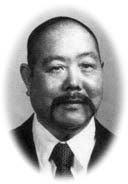
We are now offering seminars on Wang Shujin's Bagua Zhang! This series of workshops will cover Wang's entire Bagua Zhang curriculum from walking the circle to advanced weapons training. A partial list of seminar topics is listed below. Please contact us for more information: kentfhoward@gmail.com
OUR MISSION: Very few instructors are teaching Wang Shujin’s authentic Bagua Zhang to the general public. It is our goal that these teachings reach a wider audience through open instruction to all who are interested. It is in that spirit of unfettered access that we offer these seminars with the aim of preserving Master Wang’s teachings for posterity.
OUR SEMINAR PHILOSOPHY: Our goal is to teach only what can be understood, assimilated, and retained within the time frame of the training. It is expected that all participants will take home the knowledge and muscle memory to establish a meaningful home practice.
SAMPLE CURRICULUM:
Bagua Zhang Basic Training (one to two days)
Basic training in Bagua Zhang including: stretching, breathing, conditioning, zhan zhuang standing meditation, stepping, circle walking, forms training, and combat theory and practice. This material is perfectly suited for those looking for a basic introduction to a lifetime practice of Bagua Zhang.
Wang Shujin’s First Form: Bagua Linked Palms (two days)
Wang Shujin’s basic form as taught in his book, Bagua Linked Palms. Curriculum includes basic warm ups, qigong, basic body principle and energy development exercises; stepping and circle walking; instruction in all eight forms in the set; and at least two self defense applications for each form.
Wang Shujin’s Second Form: Bagua Swimming Body Palms (two days)
This advanced form builds on the foundation learned in Bagua Linked Palms but frees the movements to flow more smoothly and change spontaneously. There is more spiraling and spinning in this form, and fluid footwork is essential to its proper application. Striking and controlling while in motion are two elemental principles taught throughout the set. Advanced combat applications taught include evading, encircling, and entrapping.
Wang Shujin’s Bagua Weapon Forms: Staff, Double Sword, and Cane (one to two days)
Master Wang taught several distinctive weapon forms. The cane, or walking stick; a staff form featuring an eyebrow-height stick; and a set featuring two double-edged straight swords, taiji jian. The double sword set is fairly simple, the other two more complex.
Monday, August 8, 2011
Have Faith! It's Coming!
We are making progress on the video for Bagua Linked Palms, and it is getting dangerously close to being finished. We are now adding voice-overs and music. The editing should be done within a week or so. Then we have to figure out the best way to burn copies, print labels, mail, etc. We shall sell them from this site and also from eBay, Amazon, and other commercial outlets. More info very soon!
Saturday, March 12, 2011
Bagua Linked Palms the Movie!
The book is in stores now!
We are very excited that the new book, Bagua Swimming Body Palms, is now available in stores and online. If your local book store, or Barnes and Noble, Borders, etc. big box, doesn't carry it, shame them into ordering it today. Luckily, it is distributed by Random House, so most bookstores will carry it in stock.
Thursday, May 20, 2010
Bagua Swimming Body Palms, by Wang Shujin

The manuscript for our translation of Wang Shujin's second book on Bagua Zhang, Bagua Swimming Body Palms, was just sent to the publisher, Blue Snake Books. But before it has even gotten through the first edit, Random House, the distributor, has already asked for a cover. Well, here it is. I think the designers at Blue Snake have done a good job keeping with the theme of the first. It won't be out until early 2011, but I will try to get some excerpts up here soon.
Friday, June 26, 2009
Bagua What?
Chico martial artist and writer Kent Howard spreads word of the ‘internal’ martial art, bagua zhang
By Tina Meyer (Chico News and Review, June 25, 2009)
When Kent Howard was a farm boy in 1970s Kansas, he thought he might like to be like Lilias. People of a certain age may remember Lilias—the leotard-wearing TV yogini who popularized yoga in the ’70s. Something about Lilias’ “serene, self-composed demeanor” spoke to Howard and started him on a lifelong study of Eastern meditative practices, yoga and martial arts. Now Howard wants to popularize the Chinese martial art bagua zhang, and not just to those who reside in Lotusland. Howard aims to make “bagua” the household name that yoga has become.
Howard has just published the first translation of and commentary on a 40-year-old Chinese text on bagua zhang, Bagua Linked Palms, by Master Wang Shujin ($15.95, available at Lyon Books). The book is a transmission of the teachings Howard has studied since 1973. With a B.A. degree in East Asian languages and cultures, Howard is fluent in Mandarin and well-known in the bagua community as a Taoist, martial artist, teacher, writer and translator. In fact, he has become a modern Lilias, beaming bagua to a large, international audience via YouTube (www.youtube.com/user/baguaman8). He now lives with his family in Chico, after studying in Taiwan and Hawaii for 36 years.
When Howard left the family farm in Kansas in 1973, he says, “I wanted to learn Chinese kung fu. I had no idea how to go about that, but I knew there were a lot of Chinese martial artists in Honolulu.” Off he went, with the blind faith of the young. Within months, watching a friend demonstrate bagua zhang, he was smitten.
After traveling to Taiwan on a Taiwanese grant to study Chinese in 1981, he neglected to return for 10 years, eventually marrying a Taiwanese woman and working as a director of English-language schools. During those years, he says, “I studied with a lot of very good masters, and I learned a great deal, but I never got to the core until I studied with Huang Jinsheng,” the teacher to whom his book is dedicated.
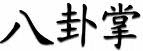
Bagua zhang is low-impact, aerobic and mentally challenging—a practice for modern times, Howard believes. Despite the popularization of Chinese kung fu (martial arts), such as tai chi chuan, very few Americans have heard of bagua zhang. Discussing its origins, Howard explains that bagua was first taught to the Chinese public in the late-19th century, but its roots run millennia deep in China, where it likely originated as “a monastic form of walking meditation, associated with Taoist and shamanic healing and longevity teachings.” Philosophically, bagua zhang (literally: eight symbol palm) is based on the eight symbols of the Chinese shamanic classic, the I Ching, or Book of Changes.
While expert discussion abounds on the philosophical underpinnings, Howard remarks, “Students shouldn’t get caught up in the symbols or breathing or form. The fundamental concept is intuitive change, how one manifestation flows into the next, naturally and without conscious thought. After years of study, you become the form.”
A beautiful and confusing martial art to watch and to learn, bagua zhang employs movements that spiral and spin around the opponent or practice partner. “You match and fuse with your partner’s center,” Howard explains. He adds that two principles are unique to this art: “There is no offensive action—every movement is a reaction to your partner. And you never make a fist.”
As an “internal” style, it emphasizes relaxation in motion, development of the mind through meditation, flexibility and movements that originate from the center of the body. Using flowing movements, an adept practitioner shifts seamlessly. The bagua fighter employs unpredictable direction changes, agile and evasive footwork and a minimal use of force.
“I’ve studied this for 36 years. Now I have time to focus on teaching and writing. I’d like to leave something behind. Bagua is not a bizarre art. In China, you see people practicing in the parks, many in their 80s or older, even Chinese rednecks! It improves longevity, physical and mental well-being, and it can be used for self-defense. There’s something in it for everybody.”
By Tina Meyer (Chico News and Review, June 25, 2009)
When Kent Howard was a farm boy in 1970s Kansas, he thought he might like to be like Lilias. People of a certain age may remember Lilias—the leotard-wearing TV yogini who popularized yoga in the ’70s. Something about Lilias’ “serene, self-composed demeanor” spoke to Howard and started him on a lifelong study of Eastern meditative practices, yoga and martial arts. Now Howard wants to popularize the Chinese martial art bagua zhang, and not just to those who reside in Lotusland. Howard aims to make “bagua” the household name that yoga has become.
Howard has just published the first translation of and commentary on a 40-year-old Chinese text on bagua zhang, Bagua Linked Palms, by Master Wang Shujin ($15.95, available at Lyon Books). The book is a transmission of the teachings Howard has studied since 1973. With a B.A. degree in East Asian languages and cultures, Howard is fluent in Mandarin and well-known in the bagua community as a Taoist, martial artist, teacher, writer and translator. In fact, he has become a modern Lilias, beaming bagua to a large, international audience via YouTube (www.youtube.com/user/baguaman8). He now lives with his family in Chico, after studying in Taiwan and Hawaii for 36 years.
When Howard left the family farm in Kansas in 1973, he says, “I wanted to learn Chinese kung fu. I had no idea how to go about that, but I knew there were a lot of Chinese martial artists in Honolulu.” Off he went, with the blind faith of the young. Within months, watching a friend demonstrate bagua zhang, he was smitten.
After traveling to Taiwan on a Taiwanese grant to study Chinese in 1981, he neglected to return for 10 years, eventually marrying a Taiwanese woman and working as a director of English-language schools. During those years, he says, “I studied with a lot of very good masters, and I learned a great deal, but I never got to the core until I studied with Huang Jinsheng,” the teacher to whom his book is dedicated.
Bagua zhang is low-impact, aerobic and mentally challenging—a practice for modern times, Howard believes. Despite the popularization of Chinese kung fu (martial arts), such as tai chi chuan, very few Americans have heard of bagua zhang. Discussing its origins, Howard explains that bagua was first taught to the Chinese public in the late-19th century, but its roots run millennia deep in China, where it likely originated as “a monastic form of walking meditation, associated with Taoist and shamanic healing and longevity teachings.” Philosophically, bagua zhang (literally: eight symbol palm) is based on the eight symbols of the Chinese shamanic classic, the I Ching, or Book of Changes.
While expert discussion abounds on the philosophical underpinnings, Howard remarks, “Students shouldn’t get caught up in the symbols or breathing or form. The fundamental concept is intuitive change, how one manifestation flows into the next, naturally and without conscious thought. After years of study, you become the form.”
A beautiful and confusing martial art to watch and to learn, bagua zhang employs movements that spiral and spin around the opponent or practice partner. “You match and fuse with your partner’s center,” Howard explains. He adds that two principles are unique to this art: “There is no offensive action—every movement is a reaction to your partner. And you never make a fist.”
As an “internal” style, it emphasizes relaxation in motion, development of the mind through meditation, flexibility and movements that originate from the center of the body. Using flowing movements, an adept practitioner shifts seamlessly. The bagua fighter employs unpredictable direction changes, agile and evasive footwork and a minimal use of force.
“I’ve studied this for 36 years. Now I have time to focus on teaching and writing. I’d like to leave something behind. Bagua is not a bizarre art. In China, you see people practicing in the parks, many in their 80s or older, even Chinese rednecks! It improves longevity, physical and mental well-being, and it can be used for self-defense. There’s something in it for everybody.”
Subscribe to:
Posts (Atom)