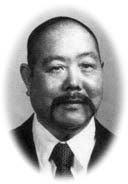
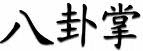
Chico martial artist and writer Kent Howard spreads word of the ‘internal’ martial art, bagua zhang
By Tina Meyer (Chico News and Review, June 25, 2009)
When Kent Howard was a farm boy in 1970s Kansas, he thought he might like to be like Lilias. People of a certain age may remember Lilias—the leotard-wearing TV yogini who popularized yoga in the ’70s. Something about Lilias’ “serene, self-composed demeanor” spoke to Howard and started him on a lifelong study of Eastern meditative practices, yoga and martial arts. Now Howard wants to popularize the Chinese martial art bagua zhang, and not just to those who reside in Lotusland. Howard aims to make “bagua” the household name that yoga has become.
Howard has just published the first translation of and commentary on a 40-year-old Chinese text on bagua zhang, Bagua Linked Palms, by Master Wang Shujin ($15.95, available at Lyon Books). The book is a transmission of the teachings Howard has studied since 1973. With a B.A. degree in East Asian languages and cultures, Howard is fluent in Mandarin and well-known in the bagua community as a Taoist, martial artist, teacher, writer and translator. In fact, he has become a modern Lilias, beaming bagua to a large, international audience via YouTube (www.youtube.com/user/baguaman8). He now lives with his family in Chico, after studying in Taiwan and Hawaii for 36 years.
When Howard left the family farm in Kansas in 1973, he says, “I wanted to learn Chinese kung fu. I had no idea how to go about that, but I knew there were a lot of Chinese martial artists in Honolulu.” Off he went, with the blind faith of the young. Within months, watching a friend demonstrate bagua zhang, he was smitten.
After traveling to Taiwan on a Taiwanese grant to study Chinese in 1981, he neglected to return for 10 years, eventually marrying a Taiwanese woman and working as a director of English-language schools. During those years, he says, “I studied with a lot of very good masters, and I learned a great deal, but I never got to the core until I studied with Huang Jinsheng,” the teacher to whom his book is dedicated.
Bagua zhang is low-impact, aerobic and mentally challenging—a practice for modern times, Howard believes. Despite the popularization of Chinese kung fu (martial arts), such as tai chi chuan, very few Americans have heard of bagua zhang. Discussing its origins, Howard explains that bagua was first taught to the Chinese public in the late-19th century, but its roots run millennia deep in China, where it likely originated as “a monastic form of walking meditation, associated with Taoist and shamanic healing and longevity teachings.” Philosophically, bagua zhang (literally: eight symbol palm) is based on the eight symbols of the Chinese shamanic classic, the I Ching, or Book of Changes.
While expert discussion abounds on the philosophical underpinnings, Howard remarks, “Students shouldn’t get caught up in the symbols or breathing or form. The fundamental concept is intuitive change, how one manifestation flows into the next, naturally and without conscious thought. After years of study, you become the form.”
A beautiful and confusing martial art to watch and to learn, bagua zhang employs movements that spiral and spin around the opponent or practice partner. “You match and fuse with your partner’s center,” Howard explains. He adds that two principles are unique to this art: “There is no offensive action—every movement is a reaction to your partner. And you never make a fist.”
As an “internal” style, it emphasizes relaxation in motion, development of the mind through meditation, flexibility and movements that originate from the center of the body. Using flowing movements, an adept practitioner shifts seamlessly. The bagua fighter employs unpredictable direction changes, agile and evasive footwork and a minimal use of force.
“I’ve studied this for 36 years. Now I have time to focus on teaching and writing. I’d like to leave something behind. Bagua is not a bizarre art. In China, you see people practicing in the parks, many in their 80s or older, even Chinese rednecks! It improves longevity, physical and mental well-being, and it can be used for self-defense. There’s something in it for everybody.”
Friday, June 26, 2009
Tuesday, October 14, 2008
A Modern Look At Dong Haiquan
The story of Dong Haiquan found in the Author’s Foreword (below) is one that was popular in Wang Shujin’s native city of Tianjin around the time he was a young man studying martial arts. Variations of the story were also circulated in pulp fiction and magazine articles of the time. But how accurate is the account?Modern scholarship has brought a more critical eye to bear on both Dong’s life and the development of Bagua Zhang. Through extensive historical research a great many new details have been brought to light that constitute a verifiable record of Dong’s connection with the emergence and popularization of Bagua Zhang.
If we look at the facts concerning Dong Haiquan’s long and eventful life, they are startlingly brief. He was born in 1813 in Jujia Wu township, Wenan County, Hebei Province. He began teaching martial arts openly in Beijing in 1870. He died in 1882 at the age of sixty-nine. All of this is a matter of public record. But a great deal more has been discovered about Dong’s life from researching both palace and local records, sifting through the literature of the times, and interviewing descendents from Dong’s home village.
Dong Haiquan was reported to have been a skilled martial artist as a young man growing up in Jujia Wu. It is not known for certain which styles he studied in his youth; though, the types of martial arts most popular in and around his village were known to be Bafan Quan, Hung Quan, Hsing Men, and Jingong Quan. It is known, however, that around 1853 Dong Haiquan left his home in Wenan County and went to live with his cousins in nearby Kaiko County. His older cousin, Dong Xianzhou, was reputed to have been a skilled practitioner of Bafan Quan, and Dong Haiquan may have learned the style from him. This is of interest because Bafan Quan is a Northern Shaolin style that is unique in its use of open palm strikes and other techniques that are found in present day Bagua Zhang.
When Dong Haiquan left Kaiko, he ventured south travelling through several provinces and spending a good deal of time in the mountains. Exactly where he wandered, and what he did, is mostly a matter of conjecture. One thing known for certain is that, somewhere along the line, he joined a sect of Daoism called Quan Zhen (Complete Truth/Reality). Quan Zhen Dao was part of the Lung Men (Dragon Gate) school of Daoism that was established by Zhou Zhangquan. Zhou was credited with developing a method a walking meditation that traversed a circle—often pacing around a tree. The Quan Zhen sect also practiced this type of meditation by walking a particular pattern, like the yin-yang symbol or a figure eight, while chanting a mantra. The reasoning behind the practice was to help calm the mind and eventually realize stillness in motion—both considered precursors to achieving a transcendental state of grace or enlightenment.
The next known whereabouts of Dong Haiquan was when he surfaced in Beijing as a man of middle age. The Stories of his escapades in the city are numerous and varied, but facts are limited. It is known, for example, that he was involved in some way with instructing guards and other personnel in the Imperial Palace. There are many tales told of his exploits there, but, again, most are apocryphal and undocumented. It is a matter of fact, however, that Dong started teaching openly in Beijing around 1870, when he was in his fifties. He taught continuously until his death in 1882, twelve years later.
The memorial stone, or stele, placed at Dong Haiquan’s grave in 1883 lists a group of sixty-six students and/or admirers who were associated with him during his life. Among those names is found a group of students who were referred to as the ‘eight great’ disciples. Their names are: Yin Fu, Cheng Tinghua, Sung Changrong, Ma Guei, Liu Dekuan, Liu Fengchun, Ma Weiqi, and Zhang Zhaodong. Several of these disciples became respected teachers in their own right and passed the art along to many students. Dong’s two senior students, Yin Fu and Cheng Tinghua have their names associated with two styles of Bagua Zhang that are still thriving today. The latter named, Zhang Zhaodong, opened a martial arts school in Tianjing where Wang Shujin studied for eight years.
There were, of course, a great many other students who learned from Dong Haiquan or, at least, studied in his school. Some sources have placed that number in the hundreds. Many of these devotees went on to found their own schools and produce students who, in turn, became famous instructors themselves.
There are other elements of Wang Shujin’s retelling of the Dong Haiquan legend that cannot be corroborated. One is the story of Dong learning Bagua Zhang from two mysterious Daoist adepts; and the other is the tale of Dong becoming a eunuch through forced castration.
The Story of Dong Haiquan being taught Bagua Zhang as a fully developed martial art by two mountain-dwelling Daoist recluses has all of the basic elements of many a martial art legend in China. All you need to do is change the names, and a few circumstances, and you have Zhang Sanfong creating Taiji Quan from a dream or Shaolin priests learning their art from an Indian monk. Chinese love to shroud their origin myths in the mists of antiquity. It lends them a certain air of distinction and provides an unassailable historical precedent.
There are several elements of this legend, however, that do not stand up well in the face of modern research. First, there has been no discoverable trace in history or literature of two Daoists named, Gu Jici and Shang Daoyuan in the Mount Ermei region of Szechuan Province. Researchers who combed those fabled mountains interviewing present day Daoist adepts found no temple records containing either name, nor of any Daoist recluses of that time who were known to teach martial arts. Second, facts point to Dong learning martial arts in his youth that contained many elements found in modern Bagua Zhang. Third, Dong was a member of the Quan Zhen sect of Daoism and learned a method of walking meditation that resembles Bagua Zhang circle walking patterns and stepping. Finally, Dong Haiquan seemed quite happy to allow the origins of Bagua Zhang to be obscured by legend rather than have contemporaries believe that he had synthesized it whole cloth from elemental skills derived from previous training.
The legend of Dong Haiquan becoming a eunuch is a bit more difficult to dismiss out of hand. This story has been retold by third and fourth generation practitioners of Bagua Zhang but not, significantly, by first generation students. There is also no evidence in imperial or local court records of Dong’s forced castration. Castration was known as a common punishment in Chinese history up through the Sui Dynasty, but it was rarely used in the Ming and Ching eras except in extreme cases.
There are several stories about how Dong Haiquan became known as a eunuch. According to the story on his tombstone, he pretended to be a eunuch in order to enter into service in the residence of a Manchu prince. Another such tale has him pretending to be a eunuch in order to assassinate the emperor (a plot which obviously failed). There is yet another story which has Dong actually undergoing the operation on his on volition in order to obtain employment in the palace. Finally, there is Wang Shujin’s version that has Dong involuntarily castrated for some unspecified crime. With a decided lack of corroborating evidence, we are left with examining a few facts about eunuchs to see if they might fit the picture of a great martial artist like Dong Haiquan.
Eunuchs (taijian) were employed in the imperial palace as advisors and servants of the inner circle of the emperor, and especially as retainers for emperor’s concubines and female relatives. They were trusted because of their inability to participate in sexual congress with the ladies of the court. Eunuchs came to their calling voluntarily. Self-inflicted eunuchoidism is a condition involving the surgical removal of the penis, scrotum, and testes. This complete castration of the male genitalia in young males blocked the production of testosterone and the onset of puberty. The lack of testosterone production left eunuchs with: high pitched voices; flaccid musculature; soft rounded bellies; a lack of facial and body hair; and somewhat feminine features. Eunuchs also tended to age prematurely, so a man of forty often looked like one of sixty. Eunuchs were easily identified by their unique appearance. They were also roundly despised by the general population and were often objects of derision and caricature.
No eunuchs in Chinese history were ever known to be soldiers, palace guards, or martial artists. Dong Haiquan, on the other hand, was described as an unusually strong and robust figure with the “back of a horse.” His reputed great strength, agility, and athletic prowess would seem to fly in the face of accusations of his being a eunuch. There is also the matter of his great success in attracting some of Beijing’s best young martial artists to his inner circle. It is difficult to see how a eunuch, universally reviled among the citizenry, could ever achieve such a feat.
The last question to take up in our quest for the real Dong Haiquan is whether he popularized an art that had existed previously, or if he invented his own style by marrying disparate methodologies into one cohesive system. This task is made more difficult when you consider that Dong, when asked by his disciples where he learned Bagua Zhang, would comment that he received his art from “a man who lived in the mountains.” If the system existed before Dong Haiquan, we know it was not called Bagua Zhang. That name was unknown before his time. In fact, Dong’s first generation students stated the original name for the system was Zhuan Zhang (Rotating palms). Later it was expanded to Bagua Zhuan Zhang. Finally, probably near the end of Dong’s life, or perhaps even posthumously, it was shorted to Bagua Zhang.
Several martial systems pre-dating Bagua Zhang have been examined as possible precursors to the art, but none contain all of the elements present in Dong’s method. Of course, you can take Bagua Zhang apart piece by piece and identify known techniques that pre-existed the art; but since there are only so many ways to move the human body, such similarities are to be expected. There are also certain styles of Bagua Zhang that claimed to have been established before Dong began teaching (some by many hundreds of years), but exhaustive investigation has ruled them out one by one as being wholly derived from Bagua Zhang and Dong Haiquan.
We can probably never say with absolute certainty if Dong Haiquan learned his art from another source, and merely popularized it, or whether he synthesized techniques learned from several sources and created an entirely new martial system. In any event, Dong was certainly good at marketing his product and keeping the source, as he played his cards, very close to the vest. As Lao Tzu once said, “The Sage wears rough clothing and embraces the jewel within!”
Sunday, March 16, 2008
Basic Principles of Bagua Zhang Practice
(from Bagua Zhang Connected Palms, translated by Kent Howard)

[photo of Zhang Zhaodong, Wang Shujin's teacher]
Empty Spirit; Raise Energy: Keep the head erect and straighten the back of the neck. The back of the head should float upward, but it should be held naturally. Keep your gaze level.
Contain Chest; Pull Up Back: Keep the upper body erect. Do not pull up the chest. Wrap the shoulders inward and round the back. The chest is held comfortably; the qi should flow easily.
Draw Together Lower Abdomen: The area below the navel (dan tien area) is a good place to accumulate qi. Keep the lower abdomen empty so qi can sink. This is not achieved by hollowing the abdomen but by turning the upper thighs slightly inward and dropping the coccyx, which draws the area in and down. This si also called, embracing the belly.
Breathe Slowly and Gradually: Breathe through the nose and do not use the mouth. The breath must be slow and even, like a cloud floating in the sky.
Coccyx Upright: From the neck to the tip of the coccyx, you must be extended and erect. This will allow the spinal nerves to function normally during exercise, and your reflexes will be unimpeded and lively.
Draw in Buttocks; Pull up Sphincter: Relax the lower back from the waist to the coccyx. The coccyx will naturally tuck inward as the buttocks are drawn down. You should have the intention of lightly contracting the area between the anus and the genitals.
Sink Shoulders; Drop Elbows: The shoulders have the feeling of being almost dislocated. The elbows hand downwards as if weighted. Only if the elbows will te shoulders be able to sink. In the way, qi will be allowed to penetrate to the fingers.
Tongue Touches Roof of Mouth: The tip of the tongue touches the roof of the mouth between the upper teeth and the hard palate. Close the mouth lightly and touch the teeth together. The tongue to the palate bridge allows the qi to flow without blockage. Pressing too hard with the tongue, clenching the teeth, or closing the mouth too tightly, will blunt qi.
The Six Utilities: The mind and yi (intention; conscious will); the yi and qi; the qi and li (muscular strength); the hand and feet; the shoulders and hips; Only when these six points are united and harmonious will your movements be connected as one.
The Yi is Commander and Chief: Movements of the internal martial arts are arrived at through the mind, and Bagua is no exception. Internal energy and external strength must act as one with one intent. “In movement seek stillness.”

[photo of Zhang Zhaodong, Wang Shujin's teacher]
Empty Spirit; Raise Energy: Keep the head erect and straighten the back of the neck. The back of the head should float upward, but it should be held naturally. Keep your gaze level.
Contain Chest; Pull Up Back: Keep the upper body erect. Do not pull up the chest. Wrap the shoulders inward and round the back. The chest is held comfortably; the qi should flow easily.
Draw Together Lower Abdomen: The area below the navel (dan tien area) is a good place to accumulate qi. Keep the lower abdomen empty so qi can sink. This is not achieved by hollowing the abdomen but by turning the upper thighs slightly inward and dropping the coccyx, which draws the area in and down. This si also called, embracing the belly.
Breathe Slowly and Gradually: Breathe through the nose and do not use the mouth. The breath must be slow and even, like a cloud floating in the sky.
Coccyx Upright: From the neck to the tip of the coccyx, you must be extended and erect. This will allow the spinal nerves to function normally during exercise, and your reflexes will be unimpeded and lively.
Draw in Buttocks; Pull up Sphincter: Relax the lower back from the waist to the coccyx. The coccyx will naturally tuck inward as the buttocks are drawn down. You should have the intention of lightly contracting the area between the anus and the genitals.
Sink Shoulders; Drop Elbows: The shoulders have the feeling of being almost dislocated. The elbows hand downwards as if weighted. Only if the elbows will te shoulders be able to sink. In the way, qi will be allowed to penetrate to the fingers.
Tongue Touches Roof of Mouth: The tip of the tongue touches the roof of the mouth between the upper teeth and the hard palate. Close the mouth lightly and touch the teeth together. The tongue to the palate bridge allows the qi to flow without blockage. Pressing too hard with the tongue, clenching the teeth, or closing the mouth too tightly, will blunt qi.
The Six Utilities: The mind and yi (intention; conscious will); the yi and qi; the qi and li (muscular strength); the hand and feet; the shoulders and hips; Only when these six points are united and harmonious will your movements be connected as one.
The Yi is Commander and Chief: Movements of the internal martial arts are arrived at through the mind, and Bagua is no exception. Internal energy and external strength must act as one with one intent. “In movement seek stillness.”
The Eight Secrets of Bagua Zhang
(from Bagua Zhang Connected Palms, translated by Kent Howard)

[photo of Wang Shujin practicing Xingyi Quan 'Beng Quan']
The forms of Bagua Zhang and Xingyi Quan look different in practice, but the principles are congruent throughout. When practicing Bagua, use the principles of Xingyi to build power and cultivate qi to the highest level. As Mengzi said, “to cultivate my magnificent qi.” The qi Mengzi was referring to is the true qi that fills the void between heaven and earth. Here are the Eight Secrets of Bagua Zhang:
1. Three Ding (highest, outermost point): The base of the head floats upward; the palms press outward; the tongue ascends. Flatten the back of the head and push the crown upward like a power rushing toward the sky. The head is the master of the body when it is pointing heavenward and allowing the three major acupuncture points on the spine to flow freely. [Yu zhen point, behind the head; lu lu point, between the shoulder blades; wei lu point, near the base of the spine] Then the kidney chi will reach to the ni wan (a point between the eyebrows) to discipline your temperament. Palms press outward with an expression of power like pushing a mountain. Then qi will flow through the body and power will expand to the four limbs. The tongue pressing upward to the roof of the mouth will guide rising kidney qi downwards to the dan tian (near the navel) to solidify your life force.
2. Three Kou (to clamp, compress) Shoulders clamp inward; backs of the hands tops of the feet compress; teeth set. When the back clamps inward the chest will hollow and Qi power will fill your internal organs. When you compress your hands and feet, qi will flow to the arms, and your step will be steady and powerful. When you set the teeth your tendons and bones will compress.
3. Three Yuan (to round, wrap) Round the back and spine; round the chest; round the tiger’s mouth (area between the outstretched thumb and index finger). Round the back and spine and power will fill the body, straighten the coccyx and your spirit will flow upwards. Round the chest inward, and power will fill your elbows; the upper abdomen contracts slightly and your breath flows easily. Round the tiger’s mouth and a great power will flow outward; your hands will have an outwardly stretched and inwardly wrapping strength.
4. Three Min (alert, sensitive, quick): The mind is alert; the eyes sensitive; the hands quick. When your mind is alert you can react quickly to change. When your eyes are sensitive you can anticipate openings. When the hands are agile you can take the initiative before your opponent can enter.
5. Three Bao (embrace, hold): The dan tien embraces; the heart holds; the ribs encompass. The dan tien embraces qi to keep it from scattering, allowing you to attack the enemy. The heart beat holds steady, so you will not panic upon meeting your foe. The ribcage protects the internal organs, so you face the enemy without danger.
6. Three Chuei (hang down, drop): Qi descends, shoulders drop, elbows hang. When qi descends to the dan tien, your body will be as steady as a mountain. Drop the shoulders and the arms will elongate and become more lively, and the shoulders can lead the elbows. Hang the elbows and the forearms will round naturally strengthening the muscles of the chest.
7. Three Qu (to bend, curve): Arms bend; knees bend; wrists bend. When arms curve like a half-moon your strength will be abundant. When knees curve like a half-moon, your power will be substantial. When wrists bend like a half-moon, the power will be concentrated. All this is because of the joints natural stretch and contraction and bouncy unbroken strength.
8. Three Ting (to straighten, pull up): Pull up the neck to straighten the head and qi will flow to the top of the head. Lengthen the spine and flatten the lower back, and power will reach to the tips of the four limbs, and qi will fill your entire body. Pull up the knee caps and your qi will be tranquil and your spirit harmonious, like a tree growing roots.

[photo of Wang Shujin practicing Xingyi Quan 'Beng Quan']
The forms of Bagua Zhang and Xingyi Quan look different in practice, but the principles are congruent throughout. When practicing Bagua, use the principles of Xingyi to build power and cultivate qi to the highest level. As Mengzi said, “to cultivate my magnificent qi.” The qi Mengzi was referring to is the true qi that fills the void between heaven and earth. Here are the Eight Secrets of Bagua Zhang:
1. Three Ding (highest, outermost point): The base of the head floats upward; the palms press outward; the tongue ascends. Flatten the back of the head and push the crown upward like a power rushing toward the sky. The head is the master of the body when it is pointing heavenward and allowing the three major acupuncture points on the spine to flow freely. [Yu zhen point, behind the head; lu lu point, between the shoulder blades; wei lu point, near the base of the spine] Then the kidney chi will reach to the ni wan (a point between the eyebrows) to discipline your temperament. Palms press outward with an expression of power like pushing a mountain. Then qi will flow through the body and power will expand to the four limbs. The tongue pressing upward to the roof of the mouth will guide rising kidney qi downwards to the dan tian (near the navel) to solidify your life force.
2. Three Kou (to clamp, compress) Shoulders clamp inward; backs of the hands tops of the feet compress; teeth set. When the back clamps inward the chest will hollow and Qi power will fill your internal organs. When you compress your hands and feet, qi will flow to the arms, and your step will be steady and powerful. When you set the teeth your tendons and bones will compress.
3. Three Yuan (to round, wrap) Round the back and spine; round the chest; round the tiger’s mouth (area between the outstretched thumb and index finger). Round the back and spine and power will fill the body, straighten the coccyx and your spirit will flow upwards. Round the chest inward, and power will fill your elbows; the upper abdomen contracts slightly and your breath flows easily. Round the tiger’s mouth and a great power will flow outward; your hands will have an outwardly stretched and inwardly wrapping strength.
4. Three Min (alert, sensitive, quick): The mind is alert; the eyes sensitive; the hands quick. When your mind is alert you can react quickly to change. When your eyes are sensitive you can anticipate openings. When the hands are agile you can take the initiative before your opponent can enter.
5. Three Bao (embrace, hold): The dan tien embraces; the heart holds; the ribs encompass. The dan tien embraces qi to keep it from scattering, allowing you to attack the enemy. The heart beat holds steady, so you will not panic upon meeting your foe. The ribcage protects the internal organs, so you face the enemy without danger.
6. Three Chuei (hang down, drop): Qi descends, shoulders drop, elbows hang. When qi descends to the dan tien, your body will be as steady as a mountain. Drop the shoulders and the arms will elongate and become more lively, and the shoulders can lead the elbows. Hang the elbows and the forearms will round naturally strengthening the muscles of the chest.
7. Three Qu (to bend, curve): Arms bend; knees bend; wrists bend. When arms curve like a half-moon your strength will be abundant. When knees curve like a half-moon, your power will be substantial. When wrists bend like a half-moon, the power will be concentrated. All this is because of the joints natural stretch and contraction and bouncy unbroken strength.
8. Three Ting (to straighten, pull up): Pull up the neck to straighten the head and qi will flow to the top of the head. Lengthen the spine and flatten the lower back, and power will reach to the tips of the four limbs, and qi will fill your entire body. Pull up the knee caps and your qi will be tranquil and your spirit harmonious, like a tree growing roots.
Thursday, November 1, 2007
Bagua Zhang Connected Palms 3rd Form
The Hawk Swoops Upward
[Master Wang from “Bagua Zhang and the I Ching” chapter]
Zhen: The trigram shape is symbolized by a basin standing upright. The principle is one of vibrating or quaking. Powerful actions bring fearful reactions that will lead to order and control. The awe of power opens the way. The palm form is ling, to lead. In practice ling emulates the form of Zhen—yielding above but firm below, seeking movement within stillness. This is the birth of yang. The intention is one of searching deeply and unpredictable change. The third form, The Hawk Swoops Upward, utilizes the technique of ling as its theme. If practiced correctly the liver's chi will be harmonized; if not you will become easily angered.
[Master Wang from "The Hawk Swoops Upward" chapter]
As you walk the circle in a left guard posture, toe-in with the right foot turning to the left and facing the center of the circle. Spin on the ball of the left foot so you perform a 180° left turn and step to the left. The right foot steps forward beside the left with feet parallel (the back faces the center of the circle). At the same time turn the right palm toward the chest in an upward motion. The movement contains the idea of drilling and the arm forms a half-moon shape. The left hand holds its original shape with the palm turned outward and pressing down. Keep the arm bent and held in front of the stomach. The body posture is upright and natural.
Continuing on from above, turn the toes of both feet inward as you twist your upper body to the left using the power of the waist. Shift the weight to your right foot and turn your head to look left. Take a long step to the rear with your left foot, in the manner of "Snake Creeps Down" (a movement from Taiji Quan). Both palms turn downward and spread in opposite directions with a feeling of being "outwardly stretched and internally bound." The left palm reaches toward the left foot—the lower the better. (Of course, how low you go will depend upon your strength and balance.) The right palm pushes off to the upper right. Both elbows are bent giving the arms the shape of a half moon.
To complete the form, turn your left toes outward and shift your weight onto the left foot. At the same time, twist your left palm outward and push frontward into a left forward stance. Next place your right foot even with the left without adding weight. At the same time, the right hand turns palm upward and drills under the left elbow. Finish as you did the Single Palm Change by sweeping the right palm under the left, stepping the right foot forward, and twisting the waist to the right with the arms forming a right guard stance.
[Translator's Commentary, by Kent Howard]
The third form, or gua, in Wang Shujin's 'Bagua Zhang Connected Palms' is called, The Hawk Swoops Upward. A more precise English translation could be, The Hawk Flies in the Sky. But this would be missing the mark. The main action of the form is a downward movement that arcs the forward hand near the ground before sweeping upward again. The motion is much like a raptor diving on its prey and carrying it off into the sky. In other Bagua Zhang styles this move is called Swallow Skims Water, because it mimics the actions of a Barn Swallow drinking water from a pond while on the fly.
The hand method used in this form is one of grasping; while the action is that of leading. In application, you intercept the opponent's attack only to redirect him into a spiraling movement that ends with him being thrown to the ground. The Hawk Swoops Upward is one of the most beautiful of the eight forms, and, yet, it is also one of the most difficult to execute properly. You need steady balance to perform the downward spiraling 360° turn and strong legs to execute the low, sweeping attack.
Zhen is the trigram traditionally associated with The Hawk Swoops Upward. The soft, fluid movements of the upper body are supported by the steady platform of the legs below. You can see this in the structure of the trigram, yin on top is supported by yang below. The two yin lines above represent the more pliant axial-skeleton (i.e. shoulders through hips), and the solid yang line below symbolizes the sturdier legs. The secret to the Hawk's martial power is being externally firm while remaining internally active. The masters have said that if the form is executed correctly, the liver's qi will be in harmony.
The commentary on Zhen found in the Yi Jing seems to illuminate and validate the qualities of the martial form: "Zhen the Arousing incites movement. A yang line develops below two yin and presses up forcibly....the movement is within the mind. You should not resist or yield, but stay in the center of motion." This appears to echo Master Wang's dictum of keeping to “stillness within movement.”
[Master Wang from “Bagua Zhang and the I Ching” chapter]
Zhen: The trigram shape is symbolized by a basin standing upright. The principle is one of vibrating or quaking. Powerful actions bring fearful reactions that will lead to order and control. The awe of power opens the way. The palm form is ling, to lead. In practice ling emulates the form of Zhen—yielding above but firm below, seeking movement within stillness. This is the birth of yang. The intention is one of searching deeply and unpredictable change. The third form, The Hawk Swoops Upward, utilizes the technique of ling as its theme. If practiced correctly the liver's chi will be harmonized; if not you will become easily angered.[Master Wang from "The Hawk Swoops Upward" chapter]
As you walk the circle in a left guard posture, toe-in with the right foot turning to the left and facing the center of the circle. Spin on the ball of the left foot so you perform a 180° left turn and step to the left. The right foot steps forward beside the left with feet parallel (the back faces the center of the circle). At the same time turn the right palm toward the chest in an upward motion. The movement contains the idea of drilling and the arm forms a half-moon shape. The left hand holds its original shape with the palm turned outward and pressing down. Keep the arm bent and held in front of the stomach. The body posture is upright and natural.
Continuing on from above, turn the toes of both feet inward as you twist your upper body to the left using the power of the waist. Shift the weight to your right foot and turn your head to look left. Take a long step to the rear with your left foot, in the manner of "Snake Creeps Down" (a movement from Taiji Quan). Both palms turn downward and spread in opposite directions with a feeling of being "outwardly stretched and internally bound." The left palm reaches toward the left foot—the lower the better. (Of course, how low you go will depend upon your strength and balance.) The right palm pushes off to the upper right. Both elbows are bent giving the arms the shape of a half moon.
To complete the form, turn your left toes outward and shift your weight onto the left foot. At the same time, twist your left palm outward and push frontward into a left forward stance. Next place your right foot even with the left without adding weight. At the same time, the right hand turns palm upward and drills under the left elbow. Finish as you did the Single Palm Change by sweeping the right palm under the left, stepping the right foot forward, and twisting the waist to the right with the arms forming a right guard stance.
[Translator's Commentary, by Kent Howard]
The third form, or gua, in Wang Shujin's 'Bagua Zhang Connected Palms' is called, The Hawk Swoops Upward. A more precise English translation could be, The Hawk Flies in the Sky. But this would be missing the mark. The main action of the form is a downward movement that arcs the forward hand near the ground before sweeping upward again. The motion is much like a raptor diving on its prey and carrying it off into the sky. In other Bagua Zhang styles this move is called Swallow Skims Water, because it mimics the actions of a Barn Swallow drinking water from a pond while on the fly.
The hand method used in this form is one of grasping; while the action is that of leading. In application, you intercept the opponent's attack only to redirect him into a spiraling movement that ends with him being thrown to the ground. The Hawk Swoops Upward is one of the most beautiful of the eight forms, and, yet, it is also one of the most difficult to execute properly. You need steady balance to perform the downward spiraling 360° turn and strong legs to execute the low, sweeping attack.
Zhen is the trigram traditionally associated with The Hawk Swoops Upward. The soft, fluid movements of the upper body are supported by the steady platform of the legs below. You can see this in the structure of the trigram, yin on top is supported by yang below. The two yin lines above represent the more pliant axial-skeleton (i.e. shoulders through hips), and the solid yang line below symbolizes the sturdier legs. The secret to the Hawk's martial power is being externally firm while remaining internally active. The masters have said that if the form is executed correctly, the liver's qi will be in harmony.
The commentary on Zhen found in the Yi Jing seems to illuminate and validate the qualities of the martial form: "Zhen the Arousing incites movement. A yang line develops below two yin and presses up forcibly....the movement is within the mind. You should not resist or yield, but stay in the center of motion." This appears to echo Master Wang's dictum of keeping to “stillness within movement.”
Wednesday, October 31, 2007
A Brief Introduction to Master Dong Haiquan

(from Wang Shujin's, Bagua Zhang Connected Palms, translated by Kent Howard)
It is said that Master Dong was a born in Wen An County in present day Hebei Province. As a young man, he loved to gamble and often got himself into trouble. Finally he had to flee his home to live in the capitol, Beijing. But being very poor, and having no one to turn to, he soon decided to travel to the south and hide in the mountains. After a journey long and fraught with difficulties, he finally reached Mount Ermei in Szechuan Province. There he happened upon two old Daoist masters named Gu Jizi and Shang Daoyuan. They asked young Master Dong his reasons for coming to the mountains, and, liking his character and bearing, decided to accept him as a disciple and teach him martial arts and transmit the He Lo Classic (an ancient Taoist text).
The two venerable priests taught Master Dong a form of walking meditation that traversed a ba gua circle. They corrected his posture and movements and instructed him saying, "Practice this technique while circling this tree until the tree begins to pursue you, then come report to us. You can feed yourself with food from the granaries and water from the stream." Master Dong was confused by their commands but did not dare to question them. He set about practicing as he was instructed and soon fell into a routine, thus setting his mind at ease. He trained long and hard for seven years until he had worn a path three-feet deep around the tree. Then one day, while circling the tree, Master Dong suddenly observed the tree begin to tremble and lean in toward him, and he achieved sudden enlightenment. This was the fulfillment of the masters' prediction that the tree would "pursue” him.
He reported his breakthrough to his teachers who congratulated him on his progress and praised him as a worthy student. They then instructed him in a method of circling two trees by walking in a figure eight. This young Master Dong did for another two years until, as before, the trees "pursued" him. His teachers again lauded him for his steadfast progress and asked if he were homesick. Dong admitted that he was. Upon hearing this, his masters praised him for not losing his human nature. They then taught him "palm" changes and weapons forms for the next two years. After which, they pronounced his skills complete.
The two old Daoist sages then bid their student farewell and bade him to leave the mountain and return to his village. But they instructed him that, as he passed through cities and towns on his journey, he was to call on the local martial art schools and accept any challenges that came his way. Being a dutiful student, he did as he was told and competed with many boxers during his travels home and was victorious over all comers. With each successful match, the fame of his skills and technique spread throughout the martial arts world.
When Master Dong finally returned to his village, he found his ancestral home abandoned and his parents long dead. It is indeed true that, "The tree wishes to rest but the wind is unceasing; the child longs to support his parents but they are gone." He mourned his parents, paid his last respects to his ancestors, and left his home for the capitol, Beijing, in hopes of establishing himself there.
Having no place to stay in Beijing, and very little money, Master Dong spent his days wandering about the Heaven's Bridge amusement district. In the evenings he slept in the open near Heaven's Altar, where the Emperor performed his annual rites on Lunar New Year. One day the martial arts teacher of a Manchu prince, Hou Zhenyuan, came to Heaven's Altar and happened to notice Master Dong. Despite his somewhat disheveled appearance, Hou observed the young man had a rugged countenance and flashing eyes. He could see that Dong was no ordinary person. After engaging him in conversation, and learning that he, too, was a martial artist, Hou asked him politely for a match of skills.
The two decided on using a straw mat, 6 x 8 feet in diameter, as their ring. Whoever stepped off the mat would be the loser. After Dong won three successive matches, Hou respectfully admitted defeat. But he was so impressed with Master Dong, that he subsequently found him a position as a servant in the palace, in hopes of him someday instructing the prince.
The prince had no knowledge of Master Dong's skills. In fact, the prince was quite proficient in martial arts, practicing daily with great fervor, and had a very high opinion of his own skill. One day while the prince was working out, Master Dong made a small comment about his technique. When the prince heard this, he was quite surprised and ordered Master Dong to demonstrate his own skills before the assembled court. Master Dong's performance so amazed the prince, he realized at once that he was in the company of a true master. Without hesitation, he asked Dong to take him on as a student. From that time forward, Master Dong's fame spread throughout the capitol.
Alas it is said, "A tall tree catches too much wind, and fame attracts envy." Master Dong soon became a magnet for every boxer within a thousand miles who wanted to test his skills against the prince's new teacher. But they all went away with their feathers plucked. Many of these braggadocios exited the palace with stolen treasures and antiques, leaving behind messages daring Master Dong to come and get them. Dong traveled far and wide to retrieve the items in martial contests. Still the challenges and thievery continued over the course of many years, and Master Dong found little rest. Finally, Dong himself was implicated in some sort of criminal activity, and, as punishment, was castrated. From that time forward, the other servants in the palace referred to him as "Old Eunich" instead of by his name.
As Master Dong grew older, he began to feel the art taught to him by his venerable masters should be passed on to the next generation. He became acquainted with an eyeglass seller who often came to the palace to repair spectacles. His name was Cheng Tinghua. Master Dong was so impressed by Cheng's sincerity that he allowed him to became his first pupil from outside the palace gates. As the years passed, he took on more and more students from Beijing's common society. Thus, over the years, the fame of Bagua Zhang (Eight Trigrams Style) has spread until it has come to rival that of Taiji Quan (Tai Chi) and Xingyi Quan (Form-Mind Boxing) as one of the three great schools of "Internal" martial arts.
When Master Tong passed away at age ninety, his students erected a mausoleum
in his memory outside the West Gate of the capitol. Each year succeeding generations of his students still "sweep his tomb" (perform memorial rites) in his honor. Though this grandmaster of a generation is gone, along with other great masters who followed in his footsteps, his art endures. However, the great social changes of our times have placed his great art in jeopardy of someday fading away from neglect. How sad!
It is said that Master Dong was a born in Wen An County in present day Hebei Province. As a young man, he loved to gamble and often got himself into trouble. Finally he had to flee his home to live in the capitol, Beijing. But being very poor, and having no one to turn to, he soon decided to travel to the south and hide in the mountains. After a journey long and fraught with difficulties, he finally reached Mount Ermei in Szechuan Province. There he happened upon two old Daoist masters named Gu Jizi and Shang Daoyuan. They asked young Master Dong his reasons for coming to the mountains, and, liking his character and bearing, decided to accept him as a disciple and teach him martial arts and transmit the He Lo Classic (an ancient Taoist text).
The two venerable priests taught Master Dong a form of walking meditation that traversed a ba gua circle. They corrected his posture and movements and instructed him saying, "Practice this technique while circling this tree until the tree begins to pursue you, then come report to us. You can feed yourself with food from the granaries and water from the stream." Master Dong was confused by their commands but did not dare to question them. He set about practicing as he was instructed and soon fell into a routine, thus setting his mind at ease. He trained long and hard for seven years until he had worn a path three-feet deep around the tree. Then one day, while circling the tree, Master Dong suddenly observed the tree begin to tremble and lean in toward him, and he achieved sudden enlightenment. This was the fulfillment of the masters' prediction that the tree would "pursue” him.
He reported his breakthrough to his teachers who congratulated him on his progress and praised him as a worthy student. They then instructed him in a method of circling two trees by walking in a figure eight. This young Master Dong did for another two years until, as before, the trees "pursued" him. His teachers again lauded him for his steadfast progress and asked if he were homesick. Dong admitted that he was. Upon hearing this, his masters praised him for not losing his human nature. They then taught him "palm" changes and weapons forms for the next two years. After which, they pronounced his skills complete.
The two old Daoist sages then bid their student farewell and bade him to leave the mountain and return to his village. But they instructed him that, as he passed through cities and towns on his journey, he was to call on the local martial art schools and accept any challenges that came his way. Being a dutiful student, he did as he was told and competed with many boxers during his travels home and was victorious over all comers. With each successful match, the fame of his skills and technique spread throughout the martial arts world.
When Master Dong finally returned to his village, he found his ancestral home abandoned and his parents long dead. It is indeed true that, "The tree wishes to rest but the wind is unceasing; the child longs to support his parents but they are gone." He mourned his parents, paid his last respects to his ancestors, and left his home for the capitol, Beijing, in hopes of establishing himself there.
Having no place to stay in Beijing, and very little money, Master Dong spent his days wandering about the Heaven's Bridge amusement district. In the evenings he slept in the open near Heaven's Altar, where the Emperor performed his annual rites on Lunar New Year. One day the martial arts teacher of a Manchu prince, Hou Zhenyuan, came to Heaven's Altar and happened to notice Master Dong. Despite his somewhat disheveled appearance, Hou observed the young man had a rugged countenance and flashing eyes. He could see that Dong was no ordinary person. After engaging him in conversation, and learning that he, too, was a martial artist, Hou asked him politely for a match of skills.
The two decided on using a straw mat, 6 x 8 feet in diameter, as their ring. Whoever stepped off the mat would be the loser. After Dong won three successive matches, Hou respectfully admitted defeat. But he was so impressed with Master Dong, that he subsequently found him a position as a servant in the palace, in hopes of him someday instructing the prince.
The prince had no knowledge of Master Dong's skills. In fact, the prince was quite proficient in martial arts, practicing daily with great fervor, and had a very high opinion of his own skill. One day while the prince was working out, Master Dong made a small comment about his technique. When the prince heard this, he was quite surprised and ordered Master Dong to demonstrate his own skills before the assembled court. Master Dong's performance so amazed the prince, he realized at once that he was in the company of a true master. Without hesitation, he asked Dong to take him on as a student. From that time forward, Master Dong's fame spread throughout the capitol.
Alas it is said, "A tall tree catches too much wind, and fame attracts envy." Master Dong soon became a magnet for every boxer within a thousand miles who wanted to test his skills against the prince's new teacher. But they all went away with their feathers plucked. Many of these braggadocios exited the palace with stolen treasures and antiques, leaving behind messages daring Master Dong to come and get them. Dong traveled far and wide to retrieve the items in martial contests. Still the challenges and thievery continued over the course of many years, and Master Dong found little rest. Finally, Dong himself was implicated in some sort of criminal activity, and, as punishment, was castrated. From that time forward, the other servants in the palace referred to him as "Old Eunich" instead of by his name.
As Master Dong grew older, he began to feel the art taught to him by his venerable masters should be passed on to the next generation. He became acquainted with an eyeglass seller who often came to the palace to repair spectacles. His name was Cheng Tinghua. Master Dong was so impressed by Cheng's sincerity that he allowed him to became his first pupil from outside the palace gates. As the years passed, he took on more and more students from Beijing's common society. Thus, over the years, the fame of Bagua Zhang (Eight Trigrams Style) has spread until it has come to rival that of Taiji Quan (Tai Chi) and Xingyi Quan (Form-Mind Boxing) as one of the three great schools of "Internal" martial arts.
When Master Tong passed away at age ninety, his students erected a mausoleum
in his memory outside the West Gate of the capitol. Each year succeeding generations of his students still "sweep his tomb" (perform memorial rites) in his honor. Though this grandmaster of a generation is gone, along with other great masters who followed in his footsteps, his art endures. However, the great social changes of our times have placed his great art in jeopardy of someday fading away from neglect. How sad!
Tuesday, October 30, 2007
Author's Preface

(from Bagua Zhang Connected Palms, translated by Kent Howard)
Bagua Zhang, Xingyi Quan, and Taiji Quan have always been considered as internal martial arts in China. When Bagua began and who created it is the subject of debate. But it is inarguable that previous sages have passed it on, crystallized from their heart and blood for generations. It was not until the waning years of the Manchu Dynasty, and the efforts of Master Dong Haiquan, that Bagua became well-known to the common people.
In the beginning Master Dong taught only in the Imperial Palace; it was only in later years that be began accepting students from outside. From that time, however, his door was crowded with disciples "like a noisy market." Among his more famous students were Cheng Tinghua, Yin Fu, Liang Zhenpu, Sung Yungxiang, Shr Baoshan, Liu Fengchun, Li Cunyi, and my teacher, Zhang Zhaodong. Each in turn had their own disciples who in succession helped Bagua Zhang to flourish.
In the spring of 1923, at the age of 18, I began studying Bagua and Xingyi under the guidance of Master Zhang. In 1934 I also studied Post Standing (Zhan Zhuang) with Master Zhang's martial arts brother, Wong Xiangzhai. They were two of the best known teachers of their era—highly skilled, morally irreproachable, and strict disciplinarians. In 1939 I also studied Bagua Zhang for over a year with Ciao Haibo. Master Ciao had previously studied at Lo Jin Mountain, about 50 miles from Mt. Er Mei. When I learned from him, he was already over 90 years of age. As a teacher, he was a gentle, scholarly, and patient—truly a model for our generation! I originally studied a form of Sz Lianquan (4 connected fists). The hand movements were very similar to Chen Style Taiji Quan.
In 1951, three years after arriving in Taiwan, I happened to meet my former martial arts senior, Chen Banling. We shared a great deal of martial knowledge with each other. We examined techniques already mastered, for their good and bad points, and transformed our combined experience into a new style of Chen Taiji Quan. Master Chen has since passed on and is greatly missed.
There is a saying: Establish virtue and honor as our guiding principle; and our will and purpose will be bound as metal to stone. Thus I took the name of Shu-Jin (establish-metal “establish virtue like metal”) which has often been an inspiration to strengthen my resolve. I have practiced my art for these many years, avoiding social entanglements, following a strict vegetarian regime, meditating daily, practicing Buddhism, and, after my daily labors, practicing martial arts as my sole entertainment.
Bagua Zhang, Xingyi Quan, and Taiji Quan have always been considered as internal martial arts in China. When Bagua began and who created it is the subject of debate. But it is inarguable that previous sages have passed it on, crystallized from their heart and blood for generations. It was not until the waning years of the Manchu Dynasty, and the efforts of Master Dong Haiquan, that Bagua became well-known to the common people.
In the beginning Master Dong taught only in the Imperial Palace; it was only in later years that be began accepting students from outside. From that time, however, his door was crowded with disciples "like a noisy market." Among his more famous students were Cheng Tinghua, Yin Fu, Liang Zhenpu, Sung Yungxiang, Shr Baoshan, Liu Fengchun, Li Cunyi, and my teacher, Zhang Zhaodong. Each in turn had their own disciples who in succession helped Bagua Zhang to flourish.
In the spring of 1923, at the age of 18, I began studying Bagua and Xingyi under the guidance of Master Zhang. In 1934 I also studied Post Standing (Zhan Zhuang) with Master Zhang's martial arts brother, Wong Xiangzhai. They were two of the best known teachers of their era—highly skilled, morally irreproachable, and strict disciplinarians. In 1939 I also studied Bagua Zhang for over a year with Ciao Haibo. Master Ciao had previously studied at Lo Jin Mountain, about 50 miles from Mt. Er Mei. When I learned from him, he was already over 90 years of age. As a teacher, he was a gentle, scholarly, and patient—truly a model for our generation! I originally studied a form of Sz Lianquan (4 connected fists). The hand movements were very similar to Chen Style Taiji Quan.
In 1951, three years after arriving in Taiwan, I happened to meet my former martial arts senior, Chen Banling. We shared a great deal of martial knowledge with each other. We examined techniques already mastered, for their good and bad points, and transformed our combined experience into a new style of Chen Taiji Quan. Master Chen has since passed on and is greatly missed.
There is a saying: Establish virtue and honor as our guiding principle; and our will and purpose will be bound as metal to stone. Thus I took the name of Shu-Jin (establish-metal “establish virtue like metal”) which has often been an inspiration to strengthen my resolve. I have practiced my art for these many years, avoiding social entanglements, following a strict vegetarian regime, meditating daily, practicing Buddhism, and, after my daily labors, practicing martial arts as my sole entertainment.
In the summer of 1948, in an effort to escape social upheaval, I traveled through Shanghai and on to Taiwan, where I established the Cheng-Ming Martial Arts School. There, in the city of Taichung, I taught Bagua Zhang, Xingyi Quan, and Taiji Quan. Over the years, I have taught hundreds of students from all over Taiwan. Many of them have remained faithful to their art and their teacher for these long years.
In 1959 I traveled to Japan where an old acquaintance of mine Wu Botang gave me an introduction to Toyama Izumi, head of the Jodo Association of Japan , who invited me to teach Taiji Quan in his dojo. I later taught Xingyi Quan and Bagua Zhang, also for eight years. In 1963 I traveled to Japan upon accepting an invitation from the Japanese Goju-ryu Karate Association’s Central Karate Dojo. I brought along a disciple and taught for there for over two years. In 1966 I made a another trip to Japan to teach at Korin Temple in Minatoku, Tokyo for over one year.
By 1976 I had made a total of eight visits to Japan. In total, I have taught over twelve hundred students in Japan. Among these were overseas Chinese, Japanese, and foreign tourists. Many of those students were themselves masters and brought with them high-level skills in Judo, Karate, and Aikido. Altogether in Taiwan and Japan my students reached eighteen hundred.
I have had no other desire but to work hard to disseminate and perpetuate my branch of boxing. I am now 74 years old. What more can I ask than to have this stream of my art flow on forever to benefit our people. Be not selfish but ever virtuous and at ease with people. Nourish your own spirit but consider well the views of others. Hold to the middle path and find joy and contentment in your later years.
At the behest of my students, I have written this reference manual for training. My fervent hope, in setting these teachings down in writing, is to avoid contending interpretations and allow all to follow the correct method. When I was young, I learned from famous teachers, and for decades I have been following this great moral and physical Way. Chinese Martial Arts are varied and profound, and their teachings are highly sophisticated. I was a slow and clumsy learner and caught but one-tenth of my master's teachings. How dare I show my ineptitude to all and be ridiculed! And, yet, my students have been so enthusiastic that it is difficult to disappoint them.
Chinese Martial Arts are such an integral part of our cultural heritage. As a member of the Taiwan National Committee on Martial Arts, I feel I have the duty to promote them. I submit this book in order to organize my teachings and present them to the world. I cast forth this brick that others may respond with jade, and together our martial brothers throughout the world will unite in the propagation of our great national art for the benefit of all.
This text is written in a plain style with separate discussions; all movements are analyzed and explained to provide utmost clarity and clear instruction. Individual sections may be practiced separately until you are familiar, and then they may be practiced as a whole. When the upper and lower are balanced and adjusted, the inner and outer united, the right and left harmonized then it is possible to understand the mysteries. This book was rushed into publication and may contain errors and omissions within. If any are found, please correct me.
Wang Shujin of Tianjin
Taichung, Taiwan
August 1978
At the behest of my students, I have written this reference manual for training. My fervent hope, in setting these teachings down in writing, is to avoid contending interpretations and allow all to follow the correct method. When I was young, I learned from famous teachers, and for decades I have been following this great moral and physical Way. Chinese Martial Arts are varied and profound, and their teachings are highly sophisticated. I was a slow and clumsy learner and caught but one-tenth of my master's teachings. How dare I show my ineptitude to all and be ridiculed! And, yet, my students have been so enthusiastic that it is difficult to disappoint them.
Chinese Martial Arts are such an integral part of our cultural heritage. As a member of the Taiwan National Committee on Martial Arts, I feel I have the duty to promote them. I submit this book in order to organize my teachings and present them to the world. I cast forth this brick that others may respond with jade, and together our martial brothers throughout the world will unite in the propagation of our great national art for the benefit of all.
This text is written in a plain style with separate discussions; all movements are analyzed and explained to provide utmost clarity and clear instruction. Individual sections may be practiced separately until you are familiar, and then they may be practiced as a whole. When the upper and lower are balanced and adjusted, the inner and outer united, the right and left harmonized then it is possible to understand the mysteries. This book was rushed into publication and may contain errors and omissions within. If any are found, please correct me.
Wang Shujin of Tianjin
Taichung, Taiwan
August 1978
Subscribe to:
Posts (Atom)